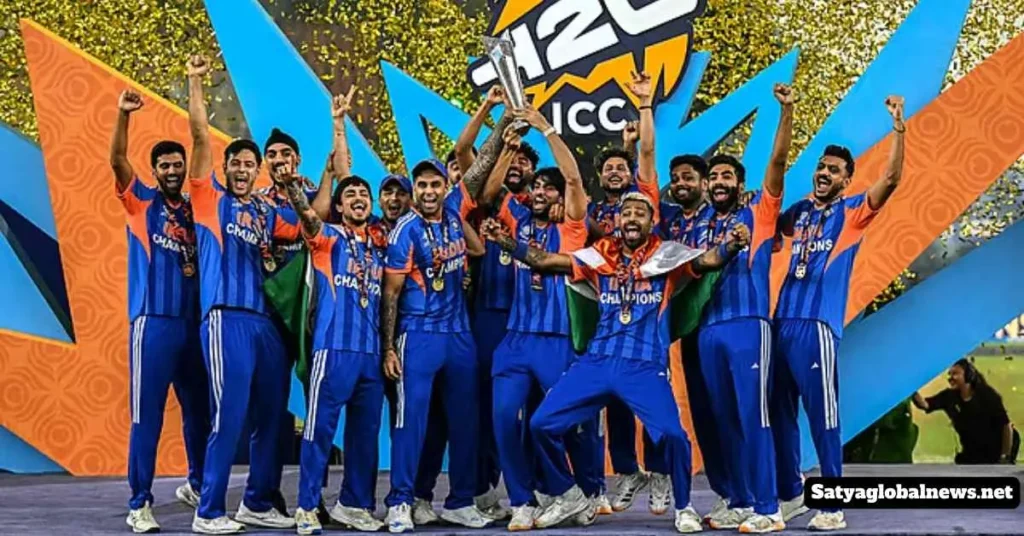
India once again proved why it is considered the top team in Twenty20 Internationals, successfully defending the ICC T20 World Cup title with a commanding 96-run victory over New Zealand in the final held at Ahmedabad on March 9, 2026.
- India’s Road to the T20 World Cup 2026 Title
- Leadership of Suryakumar Yadav
- A New Generation After the Retirement of Legends
- Tactical Adjustments That Strengthened India
- Sanju Samson: Player of the Tournament
- Abhishek Sharma’s Redemption in the Final
- Bowling Excellence: Bumrah and Varun Lead the Attack
- Contributions from Multiple Match Winners
- New Zealand’s Resilience Despite Final Defeat
- T20 Cricket Continues to Expand Globally
- A Historic Moment for Indian Cricket
- FAQs
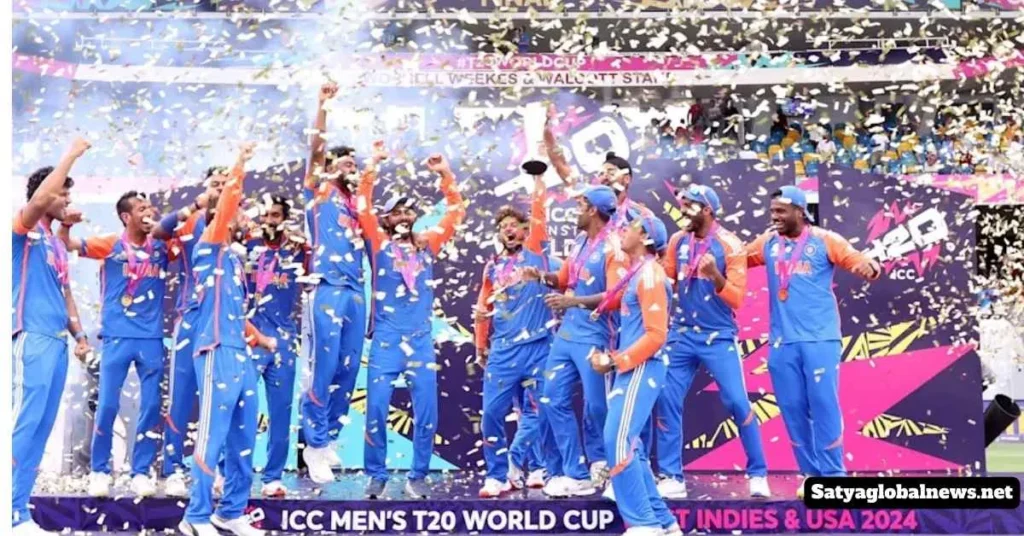
The emphatic win was not just another trophy in the cabinet but also a clear statement about the depth, flexibility, and evolving strategy of the Indian team in the shortest format of cricket. Under the leadership of Suryakumar Yadav, India maintained remarkable consistency throughout the tournament and finished the campaign as deserving champions.
The triumph also marked a significant transition period for Indian cricket. With senior players such as Rohit Sharma, Virat Kohli, and Ravindra Jadeja having retired from T20 Internationals, many experts questioned whether the team could maintain its dominance. However, the new generation stepped up and delivered one of the most memorable T20 World Cup campaigns in recent years.
India’s Road to the T20 World Cup 2026 Title
India entered the tournament as the number one ranked T20I team and lived up to the expectations. From the group stage to the knockout rounds, the team displayed aggressive batting, disciplined bowling, and exceptional fielding.
One of the standout aspects of India’s campaign was its ability to score big totals consistently. The team crossed 250 runs three times during the tournament, reflecting a fearless batting approach promoted by head coach Gautam Gambhir.
The strategy revolved around a high-risk, high-reward philosophy, encouraging batters to attack from the first ball and put pressure on opponents.
This aggressive mindset allowed India to dominate matches early and maintain control throughout the tournament.
Leadership of Suryakumar Yadav
Captain Suryakumar Yadav played a crucial role in guiding the team through a transitional phase. Taking over the leadership after Rohit Sharma’s retirement from T20Is, Surya showed calm decision-making and tactical awareness.
He maintained a balanced environment within the team while also allowing young players to express themselves freely. His aggressive batting style also reflected the team’s overall approach in the tournament.
The captain ensured that India remained focused despite occasional setbacks, including a Super Eight defeat against South Africa. Instead of panicking, the team regrouped quickly and bounced back with stronger performances.
A New Generation After the Retirement of Legends
The retirement of Rohit Sharma, Virat Kohli, and Ravindra Jadeja from the T20 format left a massive gap in the squad. These players had been pillars of Indian cricket for over a decade.
Replacing them was never going to be easy.
However, the team management and selectors successfully built a balanced and dynamic squad, mixing experienced players with emerging talents.
The new players did not simply replace the legends; they adapted to modern T20 cricket with more aggressive intent and versatility.
This transformation helped India maintain its dominance even after the departure of some of its greatest players.
Tactical Adjustments That Strengthened India
India’s success also came from smart tactical adjustments during the tournament.
Initially, the team faced challenges with its top-order combination. Having three left-handed batters at the top allowed opposing captains to exploit matchups by deploying off-spinners early.
This created difficulties for the Indian batting lineup in certain matches.
Another challenge was the temporary loss of form for Abhishek Sharma, who had been one of the team’s explosive openers.
The team management responded quickly by promoting Sanju Samson to open the innings. As a right-handed batter, Samson helped restore balance to the lineup and countered opposition spin tactics.
This flexibility proved to be a turning point in the tournament.
Sanju Samson: Player of the Tournament
One of the biggest stars of the tournament was Sanju Samson, who delivered consistent performances with the bat and emerged as the Player of the Tournament.
Samson scored 321 runs during the championship, including three consecutive scores of fifty or more in the final stages of the tournament.
His performances were particularly significant given his long journey in Indian cricket.
For years, Samson had to compete with several legendary wicketkeeper-batters such as:
- MS Dhoni
- Dinesh Karthik
- Rishabh Pant
Despite the competition, Samson remained patient and continued to improve his game.
The 2026 T20 World Cup finally gave him the opportunity to prove his potential on the biggest stage, and he delivered brilliantly.
Abhishek Sharma’s Redemption in the Final
Although Abhishek Sharma struggled with form earlier in the tournament, the team management continued to back him.
This faith paid off in the World Cup final, where Abhishek delivered a crucial half-century.
His innings helped India post a commanding total that ultimately proved too much for New Zealand to chase.
The performance also highlighted the importance of trust and patience in team management decisions.
Bowling Excellence: Bumrah and Varun Lead the Attack
India’s success was not limited to batting. The bowling unit also played a decisive role in the team’s triumph.
Two bowlers stood out throughout the tournament:
Jasprit Bumrah
Bumrah once again demonstrated why he is considered one of the best fast bowlers in the world.
His ability to deliver accurate yorkers, variations, and crucial breakthroughs made him a constant threat to opposing batters.
Varun Chakaravarthy
The mystery spinner was equally effective during the tournament.
Although batters began attacking him aggressively in the later stages, Varun still managed to finish the tournament with 14 wickets, matching Bumrah’s tally.
Together, they formed one of the most effective bowling combinations of the competition.
Contributions from Multiple Match Winners
Another reason behind India’s success was the depth of match-winning players in the squad.
Several players stepped up at crucial moments, including:
- Ishan Kishan with explosive batting
- Tilak Varma with consistent middle-order contributions
- Hardik Pandya with all-round performances
- Shivam Dube with power hitting
- Axar Patel with valuable bowling and batting support
This collective contribution ensured that India never depended on a single player to win matches.
New Zealand’s Resilience Despite Final Defeat
Although New Zealand lost the final, the team once again proved why it is considered one of the most resilient sides in international cricket.
The Black Caps showed remarkable consistency throughout the tournament and reached yet another global final.
However, they ran into an unstoppable Indian team in the championship match.
T20 Cricket Continues to Expand Globally
One of the most interesting aspects of the tournament was the growing competitiveness of emerging cricket nations.
Teams such as Nepal showed flashes of brilliance during the competition.
Their performances highlighted how the T20 format is helping expand the global reach of cricket, giving smaller cricketing nations the opportunity to compete with established teams.
This development is crucial for the future growth of the sport.
A Historic Moment for Indian Cricket
India’s victory in the 2026 ICC T20 World Cup represents more than just a successful title defense.
It symbolizes the successful transition from one generation to another, the effectiveness of modern tactical approaches, and the immense depth in Indian cricket.
With a fearless batting philosophy, versatile bowling attack, and a squad full of match-winners, India has set a new benchmark for T20 cricket.
The triumph in Ahmedabad will likely be remembered as the moment when India confirmed its dominance in the modern era of T20 international cricket.
FAQs
India won the ICC T20 World Cup 2026, defeating New Zealand by 96 runs in the final at Ahmedabad.
Sanju Samson won the Player of the Tournament award after scoring 321 runs in the competition.
Both Jasprit Bumrah and Varun Chakaravarthy finished the tournament with 14 wickets each.
Suryakumar Yadav captained India during the tournament.
The victory is significant because India successfully defended its title while transitioning to a new generation of players after the retirement of senior stars.