
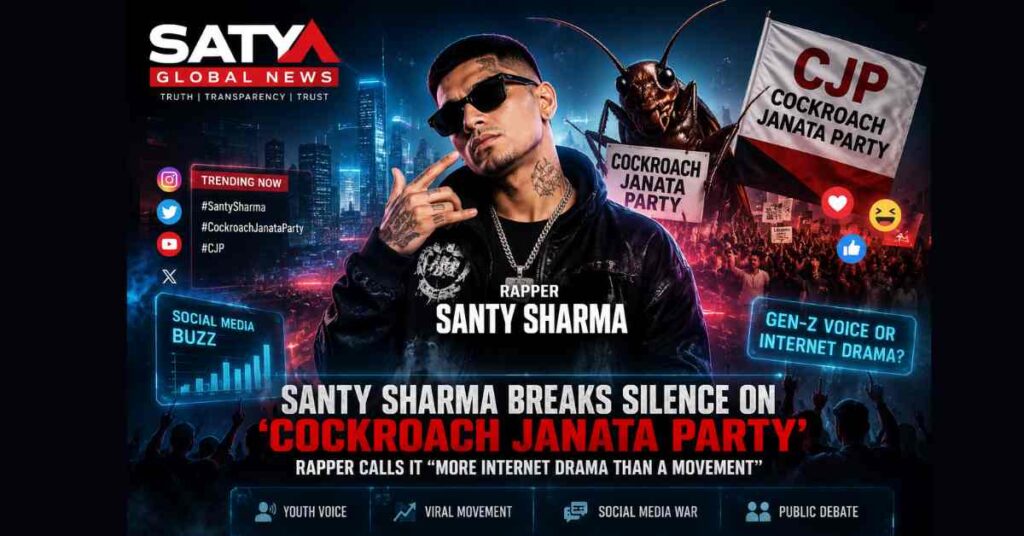
Indian rapper Santy Sharma has become one of the most talked-about personalities on social media after his recent post criticizing the viral “Cockroach Janata Party” (CJP) movement. His statement, which quickly spread across Instagram, X (formerly Twitter), YouTube, and Facebook, has sparked intense discussions among fans, political observers, and young internet users across India.

The controversy began when Santy Sharma shared an Instagram story and follow-up post calling the Cockroach Janata Party “more internet drama than a real movement.” The rapper also warned young audiences not to blindly follow every viral trend without understanding its purpose, background, and political intentions.
Within hours, screenshots of his statement went viral. Supporters praised the rapper for speaking openly about what they described as “online manipulation culture,” while critics accused him of ignoring the frustrations and struggles of India’s youth.
What Is the Cockroach Janata Party?
The Cockroach Janata Party, commonly known as CJP, is a satirical internet movement that recently exploded in popularity among Gen Z audiences. The movement uses memes, parody-style political content, humorous speeches, and exaggerated campaign-style videos to discuss issues such as unemployment, inflation, exam pressure, and the everyday struggles faced by young Indians.
The movement reportedly gained millions of followers across multiple social media platforms within a short period. Viral clips featuring symbolic “cockroach politics,” mock election campaigns, and anti-establishment humor turned CJP into one of the internet’s fastest-growing youth trends.
Many supporters claim the movement represents frustration among India’s younger generation, especially students and unemployed youth who feel disconnected from mainstream political conversations. Others see it as pure entertainment and meme culture rather than a serious political initiative.
Santy Sharma’s Statement
Santy Sharma, known for his outspoken personality and socially themed rap music, reacted strongly to the growing popularity of the movement. In his post, the rapper said that many online campaigns are designed to emotionally influence young people while offering no real solutions.

He reportedly wrote that India’s youth should focus on “education, growth, innovation, skills, and nation-building” instead of blindly participating in internet outrage or meme-based activism.
Sharma also questioned whether viral trends like CJP genuinely aim to create change or simply exist to generate online attention, engagement, and controversy. According to reports, he encouraged followers to research movements carefully before supporting them online.
His comments immediately triggered strong reactions from both sides.
Social Media Divided
Soon after Santy Sharma’s statement surfaced online, hashtags related to the rapper and Cockroach Janata Party began trending across X and Instagram. Thousands of users joined the debate, with some praising Sharma’s “responsible message” while others accused him of being disconnected from youth frustrations.
Supporters argued that the rapper was correct in warning people about blindly following social media trends. Many users claimed internet culture often encourages emotional reactions without meaningful action.
Others, however, defended the Cockroach Janata Party movement and said it gives frustrated young people a platform to express their problems through humor and satire. Critics of Sharma argued that dismissing the movement as “internet drama” ignores the real economic and social concerns behind the trend.
Several content creators, influencers, and meme pages also entered the conversation, creating reaction videos and parody posts about the controversy. This further increased the online reach of both Santy Sharma and the Cockroach Janata Party movement.
Who Is Santy Sharma?
Santy Sharma is a rising Indian rapper and digital creator known for motivational rap tracks, youth-focused content, and commentary on social issues. Over the past few years, he has built a large online following through Instagram reels, YouTube videos, and independent music releases.
The rapper is particularly popular among younger audiences because of his bold opinions, energetic delivery, and relatable themes involving ambition, struggle, and social awareness. His recent involvement in the Cockroach Janata Party controversy has pushed his name even further into mainstream online discussions.
The Rise of Meme Politics in India
Experts believe the popularity of movements like Cockroach Janata Party reflects a larger trend in Indian internet culture where memes, satire, and viral humor are increasingly influencing public conversations.
In recent years, social media has become a major platform for political commentary among young people. Instead of traditional speeches or debates, many users now engage with issues through reels, memes, parody videos, and humorous online campaigns.
Analysts say such movements often succeed because they combine entertainment with emotional messaging, making them highly shareable among younger audiences. However, critics argue that meme-based politics can sometimes oversimplify serious national issues or spread misinformation quickly.
Santy Sharma’s criticism appears to target this growing culture of viral activism and internet-driven political influence.
Public Reactions Continue
As the debate continues online, neither Santy Sharma nor the Cockroach Janata Party leadership has backed away from their positions. Fans continue to discuss whether the rapper’s comments were a responsible warning or an unnecessary attack on youth expression.
Meanwhile, social media engagement around the controversy keeps increasing, with millions of views generated through hashtags, reaction clips, debate videos, and memes.
Digital experts believe controversies like this highlight the growing power of online personalities in shaping public opinion. Influencers, rappers, and creators now have the ability to start national-level discussions with a single post or video.
For now, the Santy Sharma vs Cockroach Janata Party controversy remains one of the biggest trending internet debates in India, showing how rapidly online culture can influence mainstream public conversation.